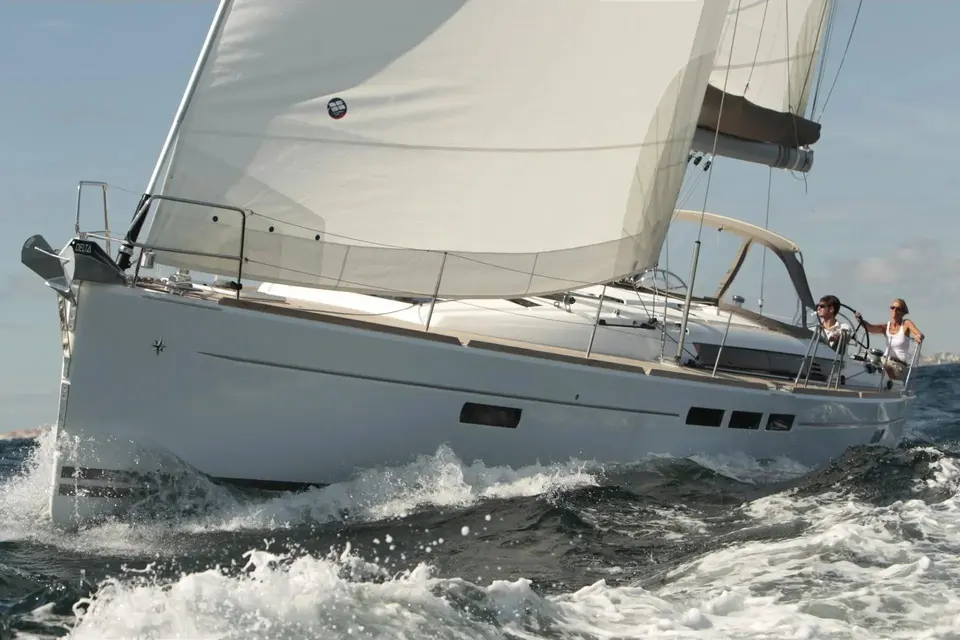
The Tuscan archipelago and Cap Corse
7 days · 155 nm · starts in Punta Ala · Italy
Punta Ala
The nearest airports are Florence and Pisa, about two hours away by car. Punta Ala marina sits in pine woods on the mainland shore opposite Elba; do the big shop on the way, as the marina itself has only a small store.
Punta Ala → Portoferraio (Elba)
Across the Piombino channel. Portoferraio is Elba's main town, in an enclosed bay under two Medici forts; Napoleon's villa is here too, from the not quite a year he spent on the island. Berth in the old harbour, a couple of minutes from the centre.
Portoferraio → Capraia
Out into open sea to the north-west. Capraia is a volcanic island with a single harbour and a single village on the hill above it; it was a prison until 1986, which is why almost nothing has been built here. In the evening, climb to Il Paese and have dinner looking across at Corsica.
Capraia → Macinaggio (Corsica)
The second sea crossing and a change of country. Macinaggio is a small port at the very tip of Cap Corse, where Corsica begins: a marina, a few restaurants and a coastal path out to bays with no road to them.
Macinaggio: Cap Corse
A free day in the north of Corsica. From here people walk to the beaches of Tamarone and Cala Francese, climb to the Genoese tower on the headland, or take a car around Cap Corse — a hundred kilometres of hairpins between the sea and the vineyards of Patrimonio.
Macinaggio → Porto Azzurro (Elba)
The longest day of the route: back across the sea to the eastern side of Elba. Porto Azzurro is the former Spanish fortress of Longone above a round bay, and today one of the most pleasant harbours in the archipelago.
Porto Azzurro → Punta Ala
Back to the mainland along the south coast of Elba and through the Piombino channel. Refuelling and handover.
The Tuscan archipelago is not the Mediterranean of the brochures: there is no chain of bays an hour apart, but there is Elba, the size of a small country, near-empty Capraia and a crossing of open sea to Corsica. A loop of about 155 nm, and on two of the seven days you go hours without sight of land — a route for a crew that wants to sail rather than sit.
Practicalities
- Weather: open sea lies between Elba, Capraia and Corsica, and the mistral from the north-west raises a short, steep swell here. Plan both long crossings for the morning and only on a fresh forecast; the fallback in wind is to stay on Elba, which is enough for a whole week on its own.
- Corsica is France: both countries are in Schengen and there are no border formalities, but the fleet must allow the boat to leave Italian waters. Check at booking — some companies charge extra for it or restrict the cruising area.
- Capraia and part of these waters lie inside the Tuscan Archipelago marine park: anchoring is not permitted everywhere and boats take buoys off Capraia. The base issues the zone map, and it changes from season to season.
- Berths: Portoferraio, Porto Azzurro, Capraia and Macinaggio are marinas, booked ahead in August and expensive by the night. Budget for berths separately from the boat.
When to go and what it costs
Italy is dearer than its neighbours in summer and noticeably cheaper in spring: a median €202 per person per week in spring against €462 in summer. If your dates are flexible, May and early June give the best balance — and booked 2–3 months ahead, a spring week comes out at about €173 per person.
RYC Rentals data, 2,062 offers from 2024–2026, as of 13 Aug 2026 · full breakdown →